Tuesday, 6 September 2011
Rain and climate
From The Chiefio - a fascinating analysis of how precipitation must be a major uncertainty in the assumptions behind climate change models.


Rarity isn't everything

One of my old hobbies was collecting antique china, or porcelain as it's usually called in collecting circles. I don't know why I took it up, it just happened for some reason.
Anyway, I came to know quite a bit about the subject and together with my better half spent a lot of time hunting around antique fairs, junk shops or whatever. One day I came across the saucer dish pictured above. These shallow, straight-sided, flat-bottomed dishes were fashionable during the 1830s, possibly running into the 1840s. Nobody seems quite sure what they were used for even though they must have been very popular because loads have survived. Maybe they were soup dishes.
The dish I discovered isn't at all unusual apart from the mark on the back - the letters TE in a fancy border. Even when I first took a look at the thing, I knew I hadn't seen the mark before and was pretty sure it was a rarity. Often these dishes aren't marked at all or they have fake Chinese marks. Yes that's right - fake Chinese marks because China is the home of porcelain.
Anyway, I bought the thing for (I think) £4 and when I got it home I found that TE wasn't in the standard book of marks. Maybe it still isn't - I haven't looked recently. A bit of investigation and an opinion from an acknowledged national expert strongly indicated that this dish is a piece of Thomas Ellis porcelain. Thomas Ellis is recorded as a china-manufacturer in Longton, Staffordshire from about 1830 to 1835, so the mark fits well with this attribution.
The interesting thing for me was that there were no other recorded examples of Thomas Ellis porcelain. It was a unique piece - and possibly still is. All very satisfactory for a collector apart from one thing - as a piece of antique porcelain the quality is crap. Too good for Oliver Twist's workhouse gruel, but that's the biggest lift you can give it.
The pattern is known as the Brosely pattern, a forerunner of Willow Pattern. This is a printed pattern and it is obvious that Thomas used second-hand printing plates because the pattern is decidedly blurred. It is very pale too, so Thomas was on a tight budget and had to be stingy with the cobalt. The stilt-marks where the dish rested on fire-clay supports during firing are also clearly visible - on the 'decorative' side at that.
So what's it worth?
Well obviously there are no collectors of Thomas Ellis porcelain apart from me and there are no collectors of crappy-quality antique porcelain either. No supply and no demand in other words. Poor old Thomas - it's a curio, worth very little. I still like it though, partly because there must be a story behind Thomas Ellis and his doomed enterprise and partly because it may be crappy but it is super-rare and I found it.
Monday, 5 September 2011
John Stuart Mill

One hesitates to quote from John Stuart Mill's magnificent essay On Liberty because it is so well-known, but sometimes these things bear repeating. From dietary salt to climate change to the supposed effects of passive smoking, modern authoritarians frequently seek to sidestep Mill's unanswerable words by inventing harm done to third parties. Oppressive legislation is enacted not just for our own good, but more significantly for the good of others. The number of possible examples is vast, but a few reminders are:-
CO2. A whole range of oppressive measures are justified by the supposed effect of CO2 on others via imaginary changes to the global climate. UK Vehicle Excise Duty on cars is just one where spurious effects on third parties are used to justify oppressing huge numbers of blameless individuals.
Salt. Manufacturers are coerced into reducing salt in food because of the supposed harm it does to an unspecified group of people who consume the products but cannot tell how salty they are.
Smoking. A vicious series of oppressive measures taken against smokers are justified by wildly exaggerating the effect of passive smoking on third parties. The term passive smoking was itself invented to embed the exaggeration into our language.
Alcohol. A number of authoritarian bodies are working towards much more oppressive regulation of our drinking habits by exaggeration and by highlighting the harm inflicted on others, in this case a minority of problem drinkers.
It is worth reminding ourselves why authoritarians do this - how they widen the net by concocting scenarios where third parties are supposedly harmed by otherwise private actions, scenarios almost always backed by fraudulent science. It is to sidestep the wisdom of Mill's famous essay.
That the only purpose for which power can be rightfully exercised over any member of a civilised community, against his will, is to prevent harm to others. His own good, either physical or moral, is not a sufficient warrant. He cannot rightfully be compelled to do or forbear because it will be better for him to do so, because it will make him happier, because, in the opinion of others, to do so would be wise, or even right. These are good reasons for remonstrating with him, or reasoning with him, or persuading him, or entreating him, but not for compelling him, or visiting him with evil in case he do otherwise. To justify that, the conduct from which it is desired to deter him must be calculated to produce evil to someone else. The only part of the conduct of anyone, for which he is amenable to society, is that which concerns others. In the part which merely concerns himself, his independence is, of right, absolute. Over himself, over his own body and mind, the individual is sovereign.
John Stuart Mill - On Liberty
Sunday, 4 September 2011
Arrested development

Some things are so obvious we don't often raise them publicly in case the mere act of raising something so obvious suggests we are not aware of the facts of life. I'm thinking of those things we have to put up with even though they clearly shouldn't be happening, but are so ingrained we don't often make much of a fuss about them. Embarrassing stuff.
Here in the UK, a really embarrassing issue is the infantile nature of political language. In a democracy, we should know the government's view on a range of important political issues. When a minister speaks we should understand what is being said. The minister should speak unambiguously, adult to adults. When we elect a new government, there should be no surprises unless unforeseen events supervene. We should have clarity and transparent dealing from our ministers whether we agree with their policies or not.
It isn't like that is it? Ministerial speeches and interviews are analysed, criticized and subjected to all kinds of interpretation by largely useless professional pundits, but the profoundly infantile nature of ministerial language is rarely acknowledged. Yet evasion, equivocation and obvious lies are what we were supposed to grow out of as children. Adults who reach the dizzy heights of a ministerial position should not, as a matter of routine, resort to kindergarten evasions and dissimulation.
Yet they do it all the time - kindergarten language is exactly what they employ. Maybe with a sprinkling of a few grown-up words, but grown-up content - we almost never get that. The advantage to politicians is obvious. You can't make a child use adult language and as long as it remains the norm, we can't make our government ministers use adult language either. Try it, and as with children you get more evasion.
We don't have grown-up political dialogue with our political leaders do we? Pundits may pretend to pick over the content as much as they like, but the public utterances of our political masters are childishly evasive and immature. Like Peter Pan, they seem unable or unwilling to speak to us adult to adults.
What's wrong with these people?
Saturday, 3 September 2011
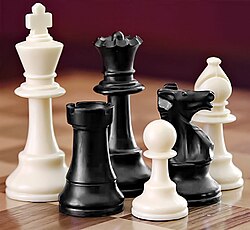
Wordplay - move
 |
| From Wikipedia |
Samuel Johnson's dictionary 3rd edition published in 1766 defines 'move' as:-
To MOVE, v, n.
1. To go from one place to another.
2. To walk ; to bear the body.
3. To go forward.
4. To change the posture of the body in ceremony.
Movement is what the universe is all about - from Newton's laws of motion to the theory of relativity to quantum theory. Instead of cogito ergo sum, Descartes could well have opined moveor ergo sum - I move therefore I am. Maybe that wasn't philosophical enough for him, yet movement is more fundamental than thinking as Descartes really should have known. It's all about change - to change is to move, to move anything is to change something.
There is more to moving than simple physical movement of course, there is a complex social aspect too where movement and change fuse into one. We all have our own moves to make in the great game of life, taking this path or that, making this change or that. Movement is a compulsory fact of life. To die is to have no moves left in the locker, not even the faintest expression of regret.
So looking back on our lives to date, how many of us think we made the right moves? Would we play them differently if allowed to play the game again, especially now we've had a better look at the book of rules? Because that's what life is all about isn't it? Winners and losers, good moves and bad moves, moves made from habit, moves we've learned too well, moves that no longer work as well as they once seemed to.
Is there time to work out some better moves, or does the whole game slowly slip from our grasp? Like a Victorian automaton, do we keep playing the same moves over and over because we have nothing better?
Are most of the real moves made by others? Is the state looking over our shoulder, moving for us, fiddling with the rules - the compulsive kibitzing of the micro-manager? Or is it time to stop thinking and just get on with the game before it's too late? Before the Last Move - the final checkmate.
Friday, 2 September 2011
Poisonous pullover

Many years ago I read a short story, only one aspect of which stuck in my mind - everything else I've forgotten.
It was a murder story where the victim was poisoned with cyanide. Nothing unusual about that of course, but the poisoner made the cyanide from raw sheep's wool and caustic soda. I'm sometimes reminded of it when out walking and see bits of sheep's wool caught on barbed wire or a hawthorn bush.
As I recall it, the poisoner heated the wool with the caustic soda in a cast-iron crucible, but I don't remember if there were any further details. Maybe that was as much chemistry as the writer had imbibed or cared to pass on. You probably could make cyanide this way. Sheep's wool, like human hair, is a form of protein with lots of nitrogen and carbon, the two elements comprising cyanide (CN) ions. But extracting sodium cyanide from the horrible mess left behind after heating raw wool with caustic soda - well I can't see that being a simple problem outside a laboratory.
I always thought the writer would have been better off inventing a poisoner who, if he really had to make his own cyanide, would at least make it from clean wool. An old pullover for example, or a cardigan. Real wool of course. He could even have had his poisoner nick the victim's pullover, turn it into cyanide and poison him with it. Poisoned with your own pullover - now that's what I call a short story plot.
The Fair Isle Poisoner.
Thursday, 1 September 2011
Land of the rising scum
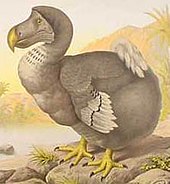 |
Most members of the UK political elite are best described as lying scum. Maybe that's not very kind and I suppose we must expect one or two inveterate liars among our political class anyway - as statistical anomalies. But when truth-tellers are the statistical anomalies then surely we have a problem.
And if the lying isn’t bad enough, their furtive attitude to personal expenses showed them to be on average, more dishonest and untrustworthy, more wedded to their own ghastly comforts than the electorate they supposedly represent. So they trash our democracy, lie through their teeth and don't like their expenses to be monitored too closely. Well fallible is okay I suppose - but there's fallible and fallible isn't there?
So the political elite have a rather obvious behaviour problem. It isn't our behaviour that needs modifying - it's theirs - and it's embarrassing.
Wannabe members of the political elite seem to arrive on the scene with nothing more than an ego the size of a bus - as it that's all the baggage they need. All they seem to know is that their party is eternally right and the other lot are fair game whether their policies have any value or not. They never seem to think of listening to ordinary folk who after all, have nothing to offer but their sanity anyway.
But at least normal people know the right answer is worth infinitely more than vicious, logic-chopping cant - always hitting low, always untruthful, always badmouthing the other lot. It really is tiresome.
It is our colossal misfortune that politics doesn’t attract the analytically-minded, the doubters, those to whom the right answers are the only answers. It attracts the ambitious egotistical loons, the self-promoters, those to whom the party consensus is gospel and fidelity is something to do with music systems. These lightweight windbags rise to the top because we have an unsolved problem with the behaviour of our political elite. We have yet to deal with it, to drag it back towards common decency, mould it into some kind of democratic accountability. The loons and the liars have to go.
The behaviour of the political classes is the real and only problem we have, all the rest is trivia. Their silly political games with their absurd, compulsive need to suppress dissent however constructive. They crawl on their bellies to the EU in the most undignified manner. They lend their ears to the most grasping and venal vested-interests and seem to like nothing better than to spout sanctimonious nonsense whenever they think we might possibly be listening. As if we ever would.
Like feeble-minded children they lust after awful third-rate celebrities in their infantile willingness to claim credit for things they haven’t done and never will do because they haven’t the talent of an amoeba.
Like feeble-minded children they lust after awful third-rate celebrities in their infantile willingness to claim credit for things they haven’t done and never will do because they haven’t the talent of an amoeba.
What we can do is very little as far as I can see, apart from telling it as it is at every opportunity. Maybe we can try voting for the person rather than the party while still laughing out loud at their juvenile games. Most of us already avoid their dreadful lying antics on the state telly channel which still has the witless gall to call itself the British Broadcasting Corporation, in its way the most sordid tale of all.
Subscribe to:
Posts (Atom)