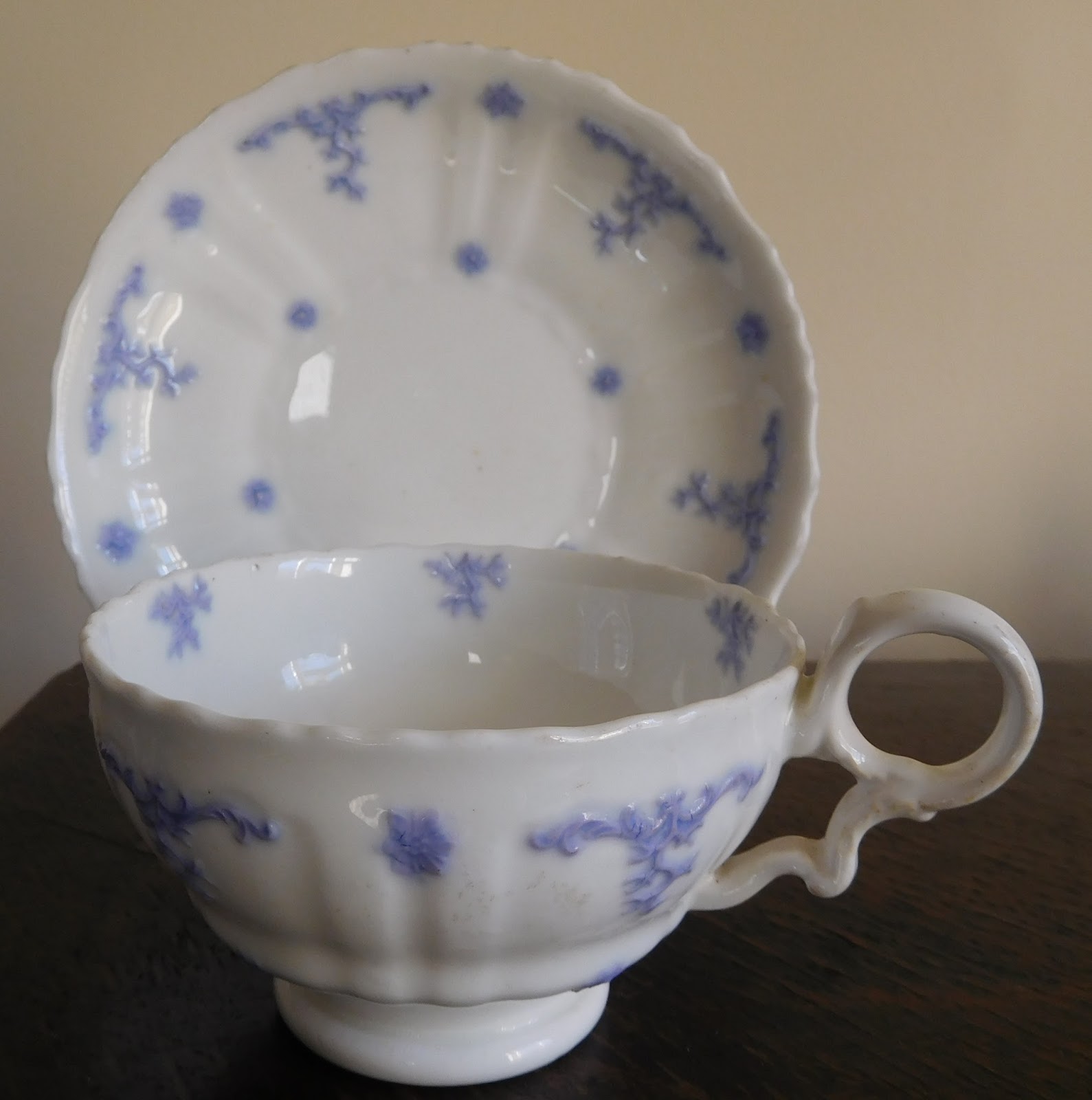
Sometimes even old cups and saucers have a slice of social history to relate. The above cup and saucer dates from round
about 1840 and although unmarked is typical of wares made by the Hilditch and Hopwood pottery at
Longton. It was made in part by child labour.
In Scriven's Report on Child Labour in the pottery industry in 1840,
Richard Moreton – then aged 9 and working at Hilditch and Hopwood reported.
‘I
am a figure maker for William Moreton [Richard’s father], I work by the piece
and can make 40 dozen (480) small figures a day: I get 1d for ten dozen, that
is about two shillings [10 pence] a week.’
So little Richard Moreton did not work for Hilditch and
Hopwood, but for his father William who subcontracted figure making to his 9
year old son.
The 'figures' little Richard made in such vast quantities may have been something like the lilac coloured sprig mouldings on the above cup and
saucer. The sprig mouldings were made from soft coloured clay rather like Plasticine.
Richard would press them out of the clay using moulds, carefully remove them, then either he or someone else would stick them to the cup or saucer with liquid clay before firing.
These are not high class items of bone china; they were intended
for middle class markets to be brought out the china cabinet for genteel
afternoon tea parties.
Also from Scriven's report
employments of families
13) The processes being such as to admit of the employment of whole families father, mother, and some two, three, or more children - their united earnings are sometimes £3. or £4. per week: but, proverbially improvident, and adopting the adage,- "sufficient unto the day is the evil thereof", they squander the proceeds of their labour in gaudy dress, or at the skittle-ground and ale-house; so that, when overtaken by illness or other casualty, and thrown for a few days out of work, they resort to their masters for a loan, or to the parish workhouse for relief.